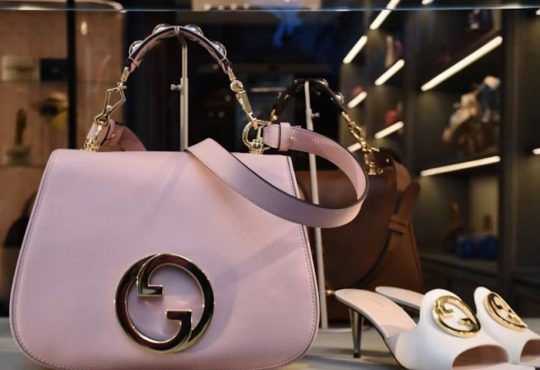


Luxury bags are far more than everyday accessories. They represent craftsmanship, heritage, and significant financial investment. Many iconic designs continue to increase in value over time, especially limited editions and classic silhouettes from brands such as Hermès, Chanel, Louis Vuitton, Dior, and Gucci. As global demand for luxury handbags continues to grow and prices rise year after year, proper care has become essential rather than optional. A properly cared-for bag maintains its appearance, structure, and resale value over many years.
Whether the collection includes a structured Hermès Birkin, a soft Chanel Classic Flap, or a coated canvas Louis Vuitton Neverfull, consistent cleaning, careful storage, and smart daily habits play a critical role in preserving condition. Knowing how different materials react to wear and environmental factors is essential to proper luxury bag care.
Understanding Materials And Why Care Matters
Luxury handbags are produced using a wide range of premium materials, each requiring a specific approach to cleaning and maintenance. Leather remains the most common, but even within leather, there are major differences. Smooth calfskin, caviar leather, lambskin, pebbled leather, and vegetable-tanned leather all age differently and react uniquely to moisture, heat, and friction.
Smooth and grained leathers are generally durable but still vulnerable to scratches, drying, and color fading if left unprotected. Lambskin, often used by Chanel, is exceptionally soft but more prone to scuffing and indentation. Pebbled leather tends to hide wear better, making it ideal for daily use, yet it still benefits from regular conditioning.
Suede and nubuck require extra caution due to their open texture. These materials easily absorb oils and liquids, which can permanently alter appearance if not treated correctly. Exotic skins like python, crocodile, and ostrich are some of the most delicate and costly materials used in luxury bags.
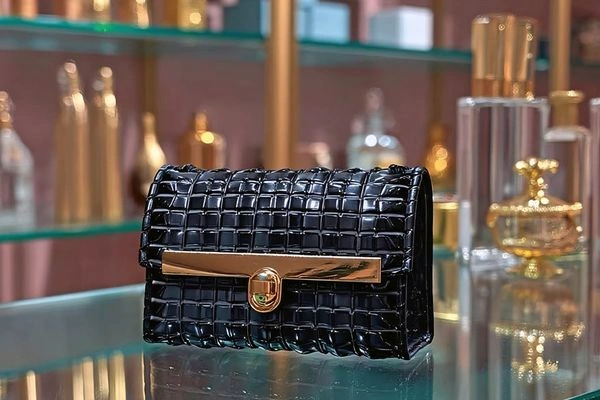
They react strongly to humidity and temperature changes, making controlled storage essential.
Canvas bags, particularly those with leather trims, are often perceived as low-maintenance. While coated canvas is resilient, the leather handles, corners, and piping still need protection to prevent cracking and discoloration. Recognizing the primary material and its vulnerabilities is the first step toward choosing suitable cleaning products and storage solutions.
Reputable leather care brands such as Saphir, Cadillac, Collonil, and Apple Brand offer cleaners and conditioners formulated for luxury leather goods. Professional restorers widely recommend these products because they nourish leather without stripping natural oils or damaging surface finishes.
Daily Cleaning Basics
Even light, everyday use exposes luxury bags to dust, oils from hands, air pollutants, and friction from clothing. Regular surface cleaning prevents buildup that can dull the appearance and cause long-term damage.
Daily care does not require elaborate routines. Simple, consistent habits make a noticeable difference over time and reduce the need for aggressive cleaning methods later.
Dust Removal And Surface Cleaning
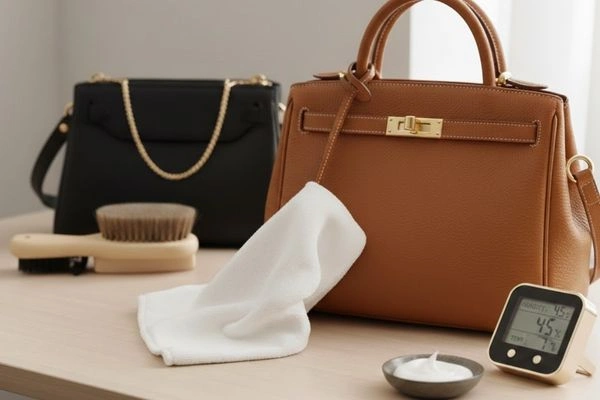
After each use or at least once a week, gently wipe the exterior of the bag using a clean, dry microfiber or lint-free cloth. This removes dust and loose debris before it settles into seams and creases. Paying attention to corners, handles, and frequently touched areas helps maintain an even finish.
For leather bags, a mild leather cleaner can be used occasionally to remove surface oils and grime. The product should always be tested on a discreet area first, such as the base or inside flap, to ensure no color change or texture alteration occurs. Applying cleaner with a soft cloth rather than directly onto the bag allows better control and prevents oversaturation.
Fabric and canvas bags may be cleaned with a lightly dampened cloth and a gentle detergent if needed. Scrubbing should be avoided, especially around leather trim, as excessive moisture can weaken adhesives and cause discoloration.
Handling Stains And Spills
Spills are one of the most common causes of permanent handbag damage. When liquid contacts the surface, immediate action is critical. Blotting gently with a clean cloth helps absorb moisture before it penetrates deeper layers. Rubbing should be avoided since it spreads the stain and damages fibers.
For oil-based stains, home remedies often worsen the problem. In these cases, professional cleaning is usually the safest option. Attempting to treat ink, dye transfer, or makeup stains with harsh chemicals can lead to irreversible discoloration.
Interior linings also deserve attention. Over time, crumbs, dust, pens, and cosmetics can soil the inside of the bag. A lint roller or soft brush helps remove debris, while light vacuuming on a low setting can keep linings clean without pulling stitches or fabric.
Conditioning And Moisture Control
Leather naturally loses moisture over time, especially when exposed to air conditioning, heat, or dry climates. Conditioning restores flexibility and reduces the risk of cracking. A high-quality leather conditioner applied every few months is usually sufficient for most bags.
Over-conditioning can be harmful. Too much product can clog pores, attract dirt, and leave a greasy residue. Following manufacturer instructions and using a small amount ensures balanced hydration.
Suede and nubuck benefit from specialized brushes that lift the nap and remove surface dirt. Protective sprays formulated for these materials can create a subtle barrier against moisture and stains without changing the bag’s texture when used correctly.
Expert Tips on Storage
Proper storage is crucial for maintaining a bag’s appearance and shape. Many types of damage occur when bags are not in use, often as a result of poor storage conditions or incorrect positioning.
Ideal Storage Conditions
Luxury bags should be kept in a cool, dry, and well-ventilated space. Exposure to direct sunlight can fade colors and dry out leather, while high humidity can promote mold growth and weaken the materials. The optimal storage environment maintains temperatures between 18°C and 22°C with moderate humidity.
Basements, attics, and bathrooms should be avoided due to moisture fluctuations. Closets with consistent airflow are typically suitable. For humid climates, silica gel packets or dehumidifiers help regulate moisture and protect sensitive materials.
Use Dust Bags And Proper Filling
Dust bags act as a protective barrier against light, dust, and airborne pollutants. Original dust bags provided by luxury brands are ideal, but clean cotton or linen alternatives work well. Plastic covers should not be used because they trap moisture and increase mold risk.
To maintain shape, bags should be lightly stuffed with acid-free tissue paper, bubble wrap, or soft fabric. Overfilling can strain seams, while underfilling allows sagging and creasing. Newspapers should be avoided due to ink transfer.
Each bag should have adequate space on the shelves. Crowding can cause pressure marks, color transfer, and distorted silhouettes, especially for structured designs.
Positioning And Rotation
Bags should be stored upright rather than hung by their handles or straps. Hanging places stress on attachment points and can permanently stretch leather over time. Straps should be tucked inside the bag to maintain their shape.
Rotating storage positions every few weeks helps prevent flat spots on areas that rest against shelves. This practice is especially helpful for softer leather bags that are more prone to indentation.
Handling And Everyday Use
Daily handling habits significantly affect how a luxury bag ages. Thoughtful use helps reduce wear while preserving structure and finish.
Gentle Handling Practices
Clean hands reduce oil transfer onto leather and fabric. Placing bags on clean, smooth surfaces prevents scratches and scuffs, especially on corners and bases.
Overloading is a common cause of damage. Heavy contents strain handles, warp bases, and weaken stitching. Using bag organizers helps distribute weight evenly while keeping interiors tidy.
Clothing choice also matters. Dark denim and heavily dyed fabrics can transfer color onto light-colored bags. Minimizing friction between garments and bags helps prevent staining.
Weather And Environmental Protection
Exposure to rain, snow, and humidity poses a risk to luxury bags. Protective sprays formulated for leather and suede can help repel water and stains. These products should always be tested before full application.
If a bag becomes wet, blotting gently and letting it air dry naturally is essential. Direct heat sources like hairdryers or radiators can cause leather to dry unevenly and crack.
Professional Cleaning And Restoration Services
Even with excellent home care, professional services are sometimes necessary. Luxury handbag cleaning and restoration has become a specialized industry, offering solutions for deep stains, structural damage, and aging materials.
Companies such as Margaret’s Couture Cleaner provide expert services for major luxury brands, including leather conditioning, color restoration, hardware polishing, and interior cleaning. Their techniques are designed to preserve original finishes rather than mask damage.
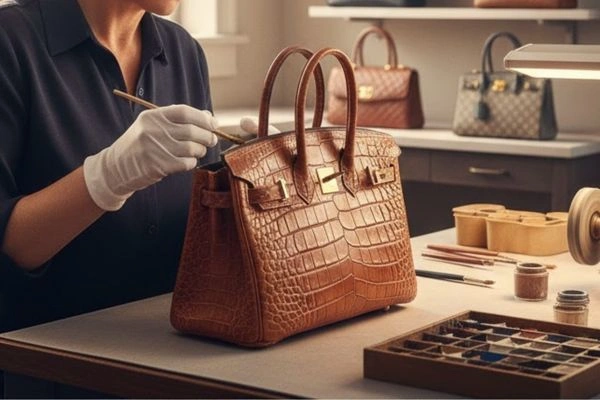
Jeeves of Belgravia and similar international specialists offer accessory care tailored specifically to luxury handbags. These professionals use advanced tools and brand-appropriate products to address issues that cannot be safely handled at home.
Professional care is especially recommended for vintage bags, exotic skins, mold exposure, or severe stains. Proper restoration can significantly extend lifespan and protect resale value.
Preventative Maintenance And Long-Term Habits
Long-term preservation depends on consistency rather than occasional intensive care.
Routine Inspection
Regular checks help spot early signs of wear, such as loose stitching, scratched hardware, or softening corners. Handling small issues quickly can prevent larger, more costly problems.
Rotate And Rest
Using the same bag daily accelerates wear. Rotating bags allows materials to recover from stress and reduces pressure on specific areas. This habit is especially beneficial for structured designs and delicate leathers.
Know When To Call Experts
Certain materials and stains require professional intervention. Ink, oil, and dye transfer are particularly difficult to treat at home. Exotic leathers also demand specialized handling to avoid irreversible damage.
Luxury Bag Care Tips to Preserve Beauty and Value
Luxury bag care is a balance of mindful daily habits, proper storage, and timely professional support. Cleaning gently, storing correctly, and handling bags with intention all contribute to preserving beauty and value. As luxury handbags are increasingly seen as both fashion statements and long-term investments, careful maintenance is key to keeping them elegant, functional, and highly desirable for years. With consistent care, these pieces can be treasured across generations, preserving their craftsmanship, beauty, and enduring appeal.